
China Property Crash: What About India?
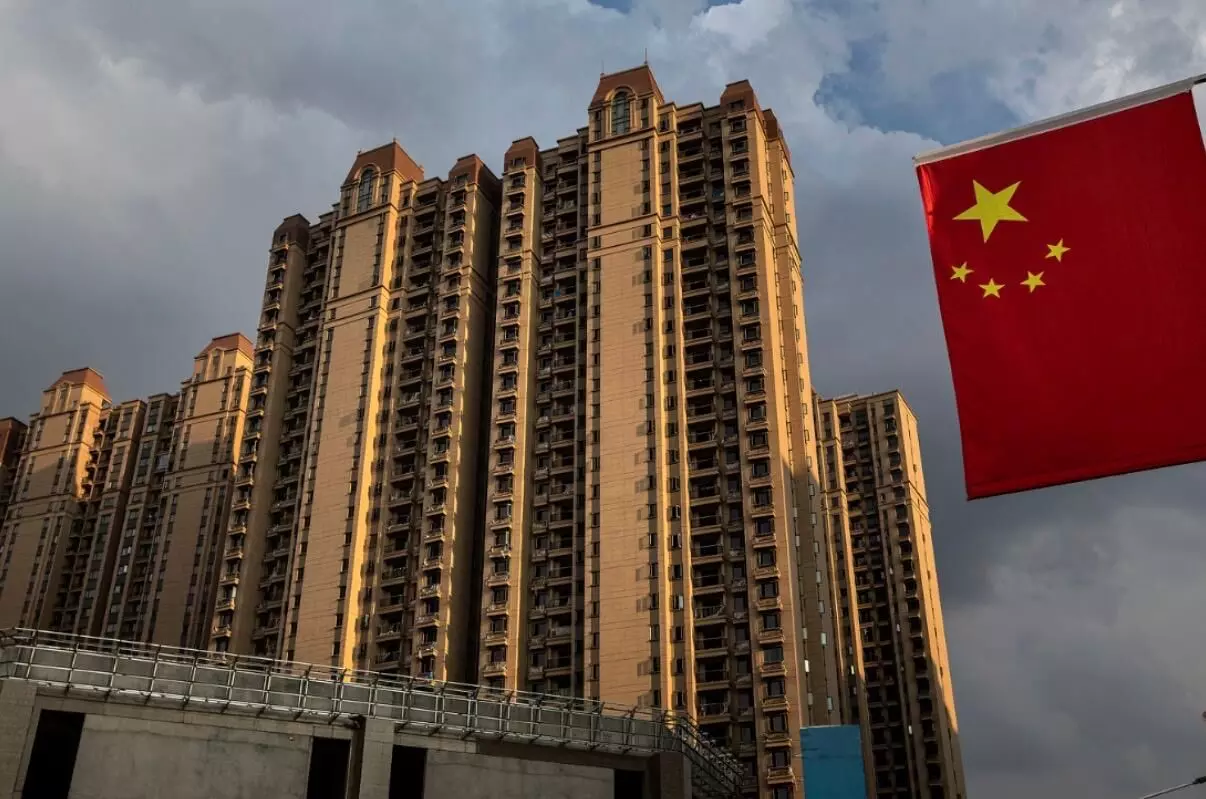


Large-scale layoffs in the IT sector over the past few years, coupled with the rapid emergence of new Artificial Intelligence (AI) tools, have put even the world's leading IT companies under significant pressure. There are growing concerns that AI tools could reduce the volume of orders received by IT companies in the coming years. As a result, shares of major IT companies have also been under pressure in the stock market. It is well known that the IT sector and the real estate sector in India are closely linked. Given the uncertainty surrounding the IT industry, experts believe that the domestic real estate sector is likely to remain under pressure for some more time. Despite these concerns, institutional investments in India's real estate market reached Rs. 42,750 crore during the first six months of this year. This is the highest level of institutional investment recorded in the past six years.
However, a significant portion of these investments has gone into the office space segment. At the same time, investments in the residential segment declined by 40 percent during the same six-month period. According to reports, Chennai and Bengaluru, two Tier-1 cities, attracted the largest share of investments during the first half of the year. Although the premium housing segment continues to perform well in the domestic market, the affordable housing segment remains in a prolonged downtrend. Meanwhile, reports indicate that residential sales have slowed in major IT hubs such as Bengaluru, Hyderabad, and Delhi. Against this backdrop, reports suggest that China's real estate market has fallen to fresh lows. China has been facing a severe real estate crisis for the past several years, and the situation has now worsened further. In fact, all the gains recorded by the market over the past two decades have now been wiped out.
Residential property prices in China have fallen back to 2006 levels. In simple terms, the Chinese real estate market is currently facing an unprecedented crisis. According to data released by the Bank for International Settlements (BIS) and published by the U.S. Federal Reserve, China's real residential property price index stood at 85.13 during the first quarter of 2026. This is a sharp decline from the peak of around 113 recorded in 2021. New home prices across 70 major Chinese cities fell 3.5 percent year-on-year in May. This marked the 35th consecutive month of decline and the steepest drop since May 2025. The secondary housing market is in an even more alarming state. According to data from the China Index Academy, resale home prices across 100 major Chinese cities declined by 0.42 percent month-on-month in June 2026. Prices fell in 88 cities, while only 12 cities recorded gains.
Since residential real estate constitutes a major portion of household wealth in China, the decline has led to significant destruction of wealth. Nearly 70 percent of the assets owned by urban Chinese households are invested in residential property, a much higher proportion than in the United States, according to experts. The collapse of the real estate sector has also severely impacted China's broader economy. Goldman Sachs estimates that the property downturn reduced annual GDP growth by around two percentage points in both 2024 and 2025. Real estate investment alone declined by 17.2 percent in 2025. The crisis has also hit China's biggest property developers. Evergrande, burdened with nearly $300 billion in liabilities, is facing liquidation, while Country Garden, once China's largest homebuilder, has defaulted on its dollar-denominated bonds. Analysts expect residential property prices in China to decline by another 4 percent in 2026, stabilize during 2027, and register only modest growth in 2028.