
Domestic Banks Shoulder Half of Adani Group’s Debt
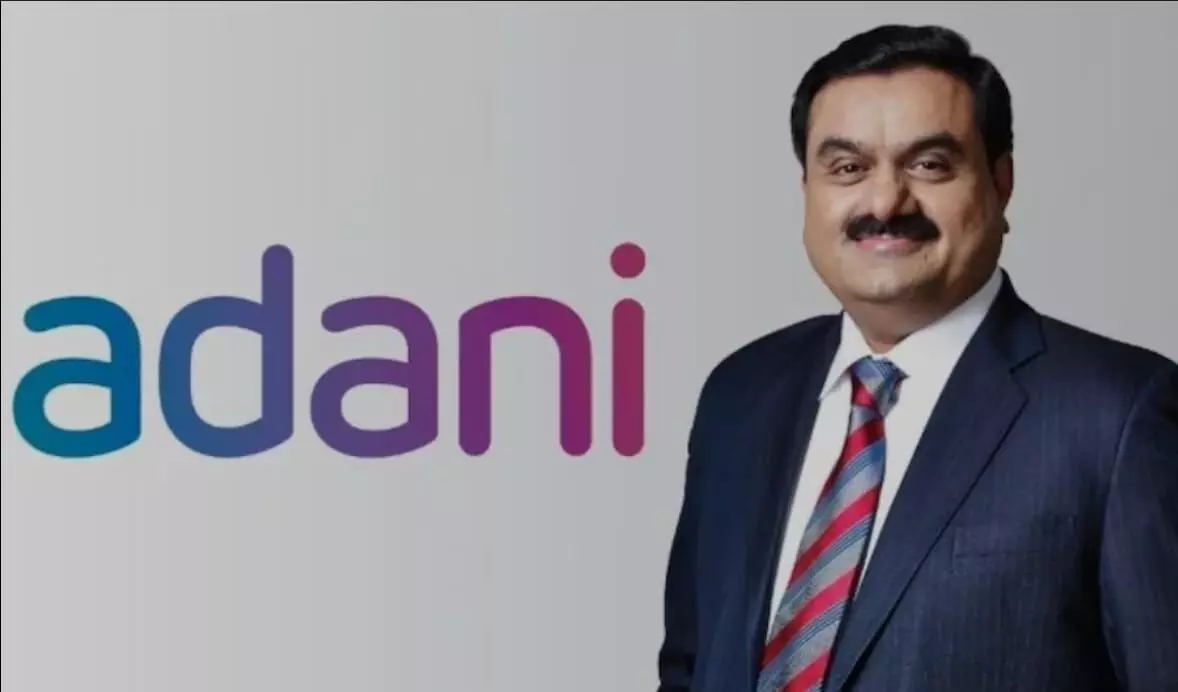


There is no doubt that among the fastest-growing industrial groups in the country, the Adani Group holds the top position. The group has also faced several allegations over time. However, Adani Group has consistently dismissed these allegations while rapidly expanding into multiple sectors. It is well known that the Adani Group has spread its wings into ports, airports, power, cement, data centers, roads, media, and many other areas. On Monday, leading English daily The Times of India published an interesting report regarding Adani Group’s borrowings. According to it, half of the total borrowings being raised by the Adani Group are being funded by domestic banks, NBFCs, and other financial institutions. On the other hand, loans from foreign banks and institutions in the form of dollar borrowings are visibly declining. Another key point here is that most of the domestic loans are being provided by public sector banks to Adani Group companies.
As of the first quarter of the current financial year, i.e., for the three-month period ending June 2025, the loans extended by public sector banks to Adani Group companies stood at ₹47,829 crore. During the same period in the previous financial year, these loans accounted for 13 percent; now they have risen to 18 percent. Private banks, however, appear to be moving cautiously in this matter, as their share remains unchanged at just 2 percent. By June 2025, private banks had extended loans worth ₹5,314 crore to the group’s companies. Following the public sector banks, the share of Non-Banking Financial Companies (NBFCs) and other financial institutions has also increased significantly. Compared to the previous financial year, their loans rose from ₹42,099 crore to ₹66,429 crore. Meanwhile, loans from domestic institutional investors fell slightly from ₹13,295 crore to ₹13,286 crore during the same period.
In just two years, domestic banks have provided nearly ₹1.3 lakh crore in loans to Adani Group companies, playing a crucial role in the group’s financing. In a presentation given to investors, the company revealed that through securing long-term projects in the power sector as well as ports, it has ensured a steady cash flow. Currently, the group holds cash reserves of about ₹60,000 crore. With the Reserve Bank of India (RBI) cutting interest rates in recent times, the group was able to raise loans at lower costs, which also improved its credit ratings. At one point, dollar bonds accounted for 31 percent of its borrowings, but that share has now fallen to 23 percent. Similarly, loans from foreign banks have decreased from 28 percent to 27 percent. A few months ago, when U.S. authorities filed corruption-related charges against Gautam Adani and his company representatives, domestic banks announced that they would review the loans given to Adani Group companies and implement stricter norms for sanctioning loans in the future. However, the U.S. case has not made any progress so far. On the other hand, PSU banks along with other financial institutions continue to sanction large-scale loans to Adani Group companies. Adding to this, the good financial results declared by the Adani Group in the last financial year have also worked in its favor.