
Amaravati Challenge: Will Chandrababu Make History or Miss the Opportunity?
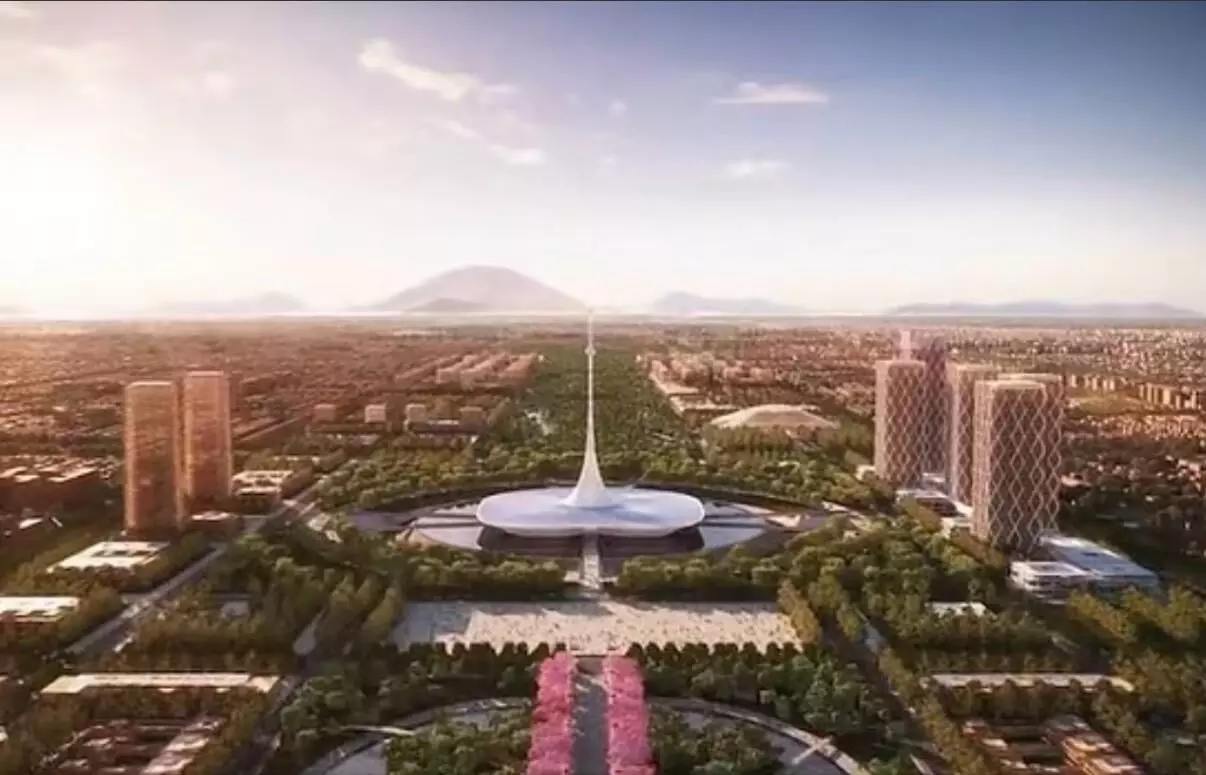


It is Andhra Pradesh Chief Minister Chandrababu Naidu who now has to decide how he wants to be remembered in history. Based on the current political scenario, power in the state is likely to remain either with the TDP or the YSRCP. YSRCP president and former Chief Minister Y.S. Jagan Mohan Reddy has already made his stand on Amaravati clear. He has categorically stated that his party's agenda in the next elections will be "Jagan versus Amaravati." Even after Amaravati was recognized as the state's capital in Parliament, and despite the government spending a combined ₹75,000 crore—including both past and current expenditure—Jagan has not accepted Amaravati as the capital. This has reinforced the perception that he has no intention of taking forward even the smallest development work in Amaravati. Normally, it is a rare opportunity for a Chief Minister and a government to build a state's capital. However, during his first term, TDP president and Andhra Pradesh Chief Minister Chandrababu Naidu created confusion by speaking of temporary and permanent capitals, and the Amaravati project failed to gain momentum.
After returning to power for a second time, Chandrababu revived the Amaravati project, which had remained largely neglected during Jagan's five-year tenure. This time, the Centre has also extended support. Even so, the pace of work in Amaravati has not met expectations. This became evident during a recent review meeting chaired by Chief Minister Chandrababu Naidu, where he instructed officials and contractors to speed up the work. Comments are now being heard that the situation in Amaravati can be understood from the fact that S.V. Srinivas, whom the Chief Minister personally brought in and appointed as Managing Director of the Amaravati Growth and Infrastructure Corporation Limited (AGICL) to accelerate the capital works, was unable to continue and resigned from his post. If even a retired officer personally chosen by the Chief Minister could not work in that environment, observers say it raises questions about what is happening behind the scenes. Meanwhile, sources in the department say there is already a significant gap between Municipal Administration Minister Narayana and CRDA Commissioner Vijayarama Raju. TDP leaders believe that such differences within the department handling a crucial project like Amaravati are not a healthy sign. They also claim that Chief Minister Chandrababu Naidu has not taken visible steps to address these differences.
Political observers say that, regardless of what leaders claim, election results are ultimately determined by the prevailing situation at the time and public opinion about the government. The key question now is whether Chief Minister Chandrababu Naidu will complete all first-phase works in Amaravati before the next Assembly elections and fulfil the promises made to farmers, or whether, as in his first term, the capital project will once again remain incomplete. If that happens, not only the farmers but also those currently executing the works are likely to face difficulties again. Looking at the current pace of construction, even TDP leaders reportedly have doubts about how much of the Amaravati project will actually be completed before the elections. According to political circles, the biggest challenge to completing Amaravati is no longer funding but a range of other issues affecting the execution of the project.
Some TDP leaders are of the view that since the state government is already borrowing extensively, it should not hesitate to raise another ₹10,000 crore if necessary to complete the capital project before the end of Chandrababu Naidu's current term. They believe that if he fails to do so despite having such an opportunity, history will remember him as a Chief Minister who failed to complete the state's capital. The ball, they say, is now completely in Chandrababu Naidu's court. Only time will tell how he chooses to play it, and the answer may not become clear until the end of 2028. At the same time, many believe that Jagan's repeated changes in stand on the capital issue have already caused him political damage. Another important point being discussed is that, even 15 years after the bifurcation of Andhra Pradesh, Jagan has chosen to make the capital issue a central election agenda. Even within the YSRCP, some leaders reportedly believe that this amounts to a political self-goal.