
Iran Targets U.S. Bases in Gulf as Tensions Over Strait of Hormuz Intensify
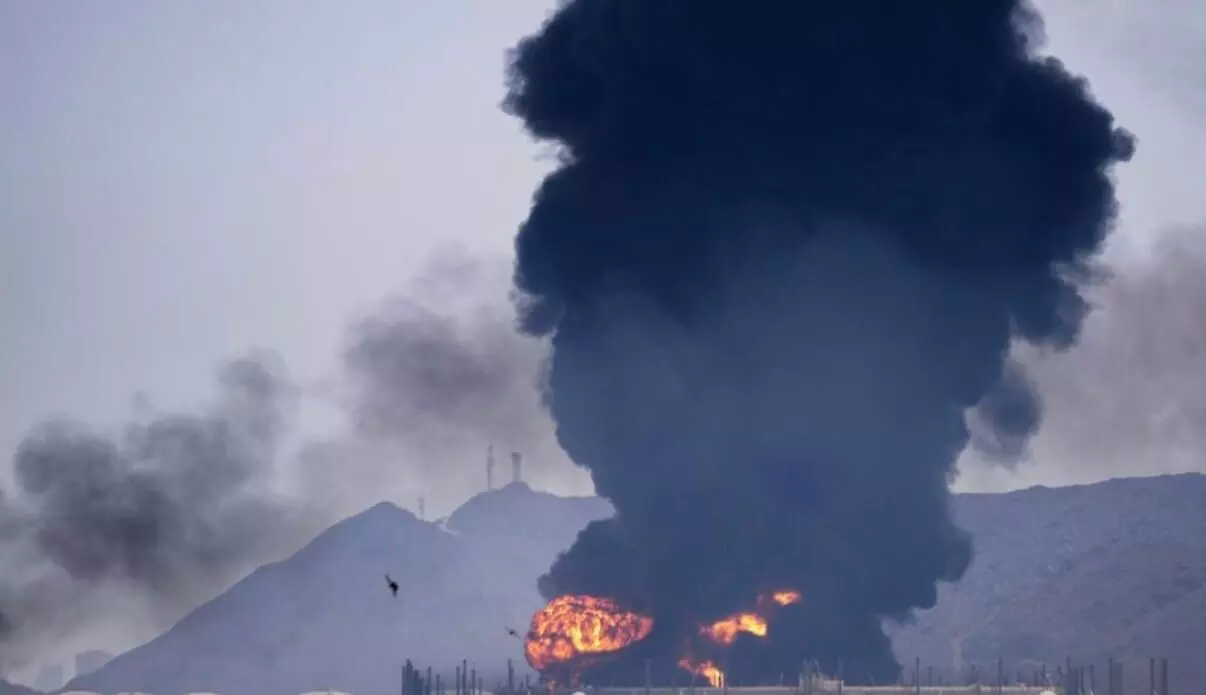


Despite repeated warnings from U.S. President Donald Trump, Iran has shown no signs of backing down. While Trump demanded that Iran publicly declare there would be no attacks on ships passing through the Strait of Hormuz, Iran has now announced that it is once again closing the strategic waterway following its latest attacks. However, the United States maintains that the Strait of Hormuz remains open. The United States has been carrying out large-scale attacks on Iran in an effort to force it to change its course. Iran, however, has refused to retreat and has instead launched attacks on U.S. military bases in Gulf countries. As a result, tensions in the region have escalated once again. The renewed exchange of attacks between the two countries has also pushed crude oil prices higher. Iran strongly condemned the latest U.S. military strikes. Describing them as a clear violation of the United Nations Charter, Iran's Foreign Ministry accused Washington of undermining regional stability and the ceasefire agreement.
In an official statement, Iran said the attacks would only further escalate regional tensions and issued a stern warning to countries cooperating with the United States. Iran declared that if any country allows the U.S. to use its territory or facilities to launch attacks against Iran, it will consider those countries as enemies as well. The Foreign Ministry warned that, as part of Iran's defensive military operations, such countries would be treated as legitimate targets. In retaliation for the U.S. attacks, Iran once again targeted American military bases in Kuwait, Jordan, and Bahrain. Earlier, the United States had carried out bomb and missile strikes on Tehran, as well as the southern Iranian coastal cities near the Strait of Hormuz, including Bandar Mahshahr, Bandar Abbas, Hendijan, Bushehr, Asaluyeh, Kangan, and Jask.
The U.S. Central Command stated that it had struck a total of 140 targets, destroying missile and drone launchers, weapons storage facilities, and intelligence and surveillance systems. It also claimed that the operation had weakened Iran's capability to attack commercial vessels in the Strait of Hormuz. Meanwhile, Iran's Islamic Revolutionary Guard Corps (IRGC) claimed that it had destroyed a U.S. Patriot missile system, a weapons depot, and radar installations in Kuwait. It also claimed to have destroyed the aircraft maintenance facility and the command and control center at Al Udeid Air Base in Qatar. Qatar, however, stated that it had successfully intercepted the Iranian missiles and drones. It added that debris from the intercepted projectiles caused explosions, leaving three people injured, including a child.